In the lead-up to April 11, 2026, expectations surrounding public demonstrations in London were marked by a growing tension between citizens advocating for free speech and a government increasingly willing to suppress dissent. The UK government’s controversial decision to classify Palestine Action as a terrorist organization in July 2025 had already set the stage for conflict. This classification placed the group in the same category as notorious armed factions, igniting fears among activists that their right to protest was under siege.
However, a decisive moment arrived when the High Court ruled on February 13, 2026, that the government’s proscription of Palestine Action was unlawful. This ruling was seen as a beacon of hope for many, suggesting that the judiciary might still protect civil liberties. Yet, the government’s immediate response was to appeal the ruling, with hearings scheduled for April 28 and 29, creating a backdrop of uncertainty as the vigil approached.
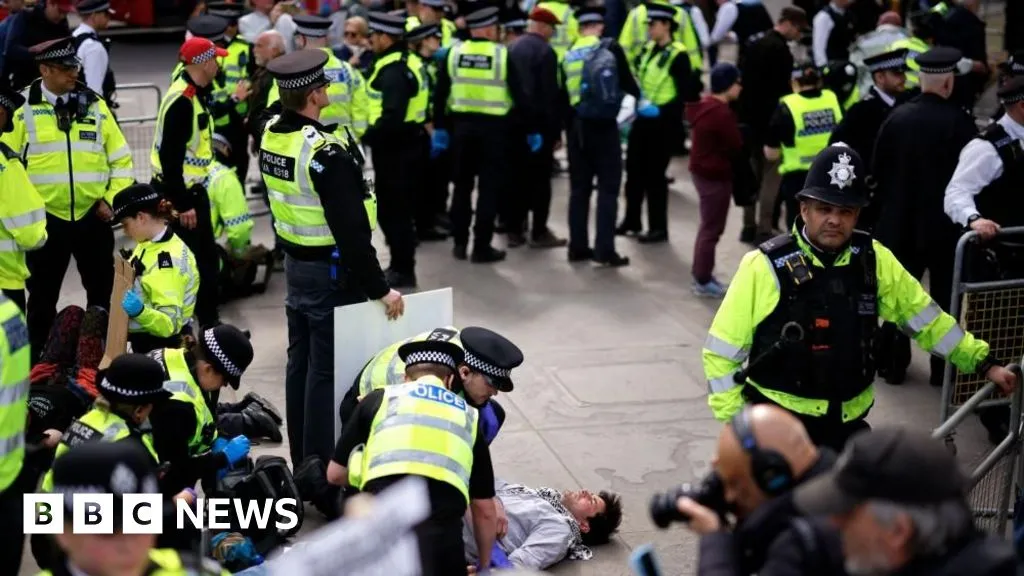
On the day of the vigil, approximately 1,500 individuals gathered in Trafalgar Square to voice their concerns, with many expressing discontent over the government’s actions. The atmosphere was charged, and the stakes were high. As the event unfolded, the Metropolitan Police took decisive action, arresting 212 people, with ages ranging from 27 to 82. This crackdown raised alarms about the limits of free speech in the UK, as demonstrators voiced their frustrations.
One unnamed demonstrator articulated the sentiment of many, stating, “I think Britain has now descended into a non-democratic situation and I think that is very dangerous [for] free speech.” This sentiment captures the growing unease among citizens who feel that their rights are being curtailed. The police’s actions during the vigil have been interpreted by some as a reinforcement of government authority rather than a protection of public order.
In a parallel development, the situation in Ireland also reflects a similar tension. Irish police, known as An Garda Siochana, have vowed to intensify enforcement against fuel-cost protesters who have been blocking critical infrastructure. The Commissioner of An Garda Siochana has stated that illegal activities by these protesters are endangering the State, leading to a swift operation to clear a blockade at the Whitegate oil refinery, which took approximately an hour.
As the situation develops, the implications for both the UK and Ireland are significant. The arrests in London and the police’s commitment to enforcing order in Ireland highlight a broader trend of increasing government control over public dissent. Justin Kelly, a spokesperson for the Irish police, emphasized, “We will not tolerate this any longer,” indicating a hardening stance against protests that disrupt public life.
Experts are now weighing in on the ramifications of these events. The juxtaposition of mass arrests in London against the backdrop of a High Court ruling raises critical questions about the balance of power between the state and its citizens. The actions of the Metropolitan Police have drawn scrutiny, with activists like Qesser Zuhrah stating, “It just shows that the Met police, they don’t serve us, they don’t protect us, they work only to reinforce what the government wants.” This perspective underscores a growing rift between law enforcement and the communities they are meant to serve.
As the UK government prepares for its appeal against the High Court ruling, the future of public demonstrations and the right to protest hangs in the balance. The outcome may not only affect Palestine Action but could set a precedent for how dissent is managed in the UK moving forward. With police actions increasingly scrutinized, the urgent question remains: how will the government navigate the delicate line between maintaining order and respecting civil liberties?