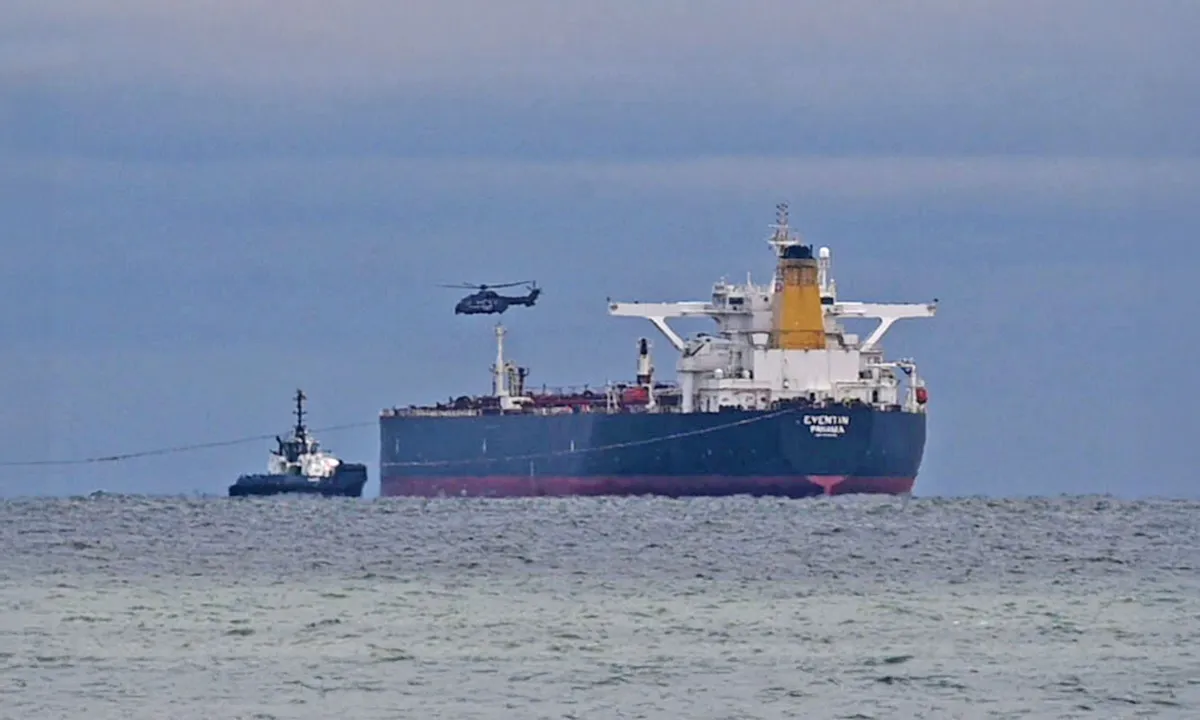
The emergence of the Russian shadow fleet is escalating tensions in the English Channel and Baltic Sea, with military responses from the UK and France. As Ukraine prepares for potential terrorist attacks against Russian vessels in the Barents and Norwegian Seas, the situation is becoming increasingly volatile.
In response to the growing threat, the British government has begun escorting oil and gas tankers with armed warships, marking a significant escalation in military readiness. This move comes as the Royal Navy has not stopped a single Russian tanker under sanctions, raising concerns about the effectiveness of current measures against the shadow fleet.
France has also taken decisive action, introducing a bill that imposes severe penalties on those associated with the Russian shadow fleet. Offenders could face fines of up to 300,000 euros and prison sentences ranging from 2 to 7 years depending on the severity of their actions. This legislative move underscores France’s commitment to countering the influence of the shadow fleet.
Meanwhile, Estonia has opted to refrain from detaining Russian vessels, citing the risk of military escalation as too high. This cautious approach reflects the delicate balance that nations must maintain in the face of increasing tensions. The number of idle tankers at the Vaindloo Anchorage has tripled to around 30-40 this week, indicating a growing presence of Russian vessels in the region.
Approximately 75% of Russia’s crude oil is transported via this shadow fleet, highlighting its critical role in the country’s economy. The Kremlin views sanctions as a malign attempt to crush its economy, and Russian officials have warned that any attempts by the British side to seize vessels associated with Russia will be regarded as “unacceptable and intolerable.”
As Moscow launches a permanent patrol of armed military vessels in the Gulf of Finland, the situation remains tense. Andrei Kelin, a Russian diplomat, stated, “This decision will not go unanswered. Appropriate measures are being considered,” indicating that Russia is prepared to respond to any perceived threats.
Despite the escalating tensions, Ukrainian President Volodymyr Zelensky noted, “Overall, the frontline is holding despite intensifying Russian attacks,” suggesting that Ukraine remains resilient in the face of aggression. However, details remain unconfirmed regarding potential Russian responses to UK actions, leaving the situation fraught with uncertainty.