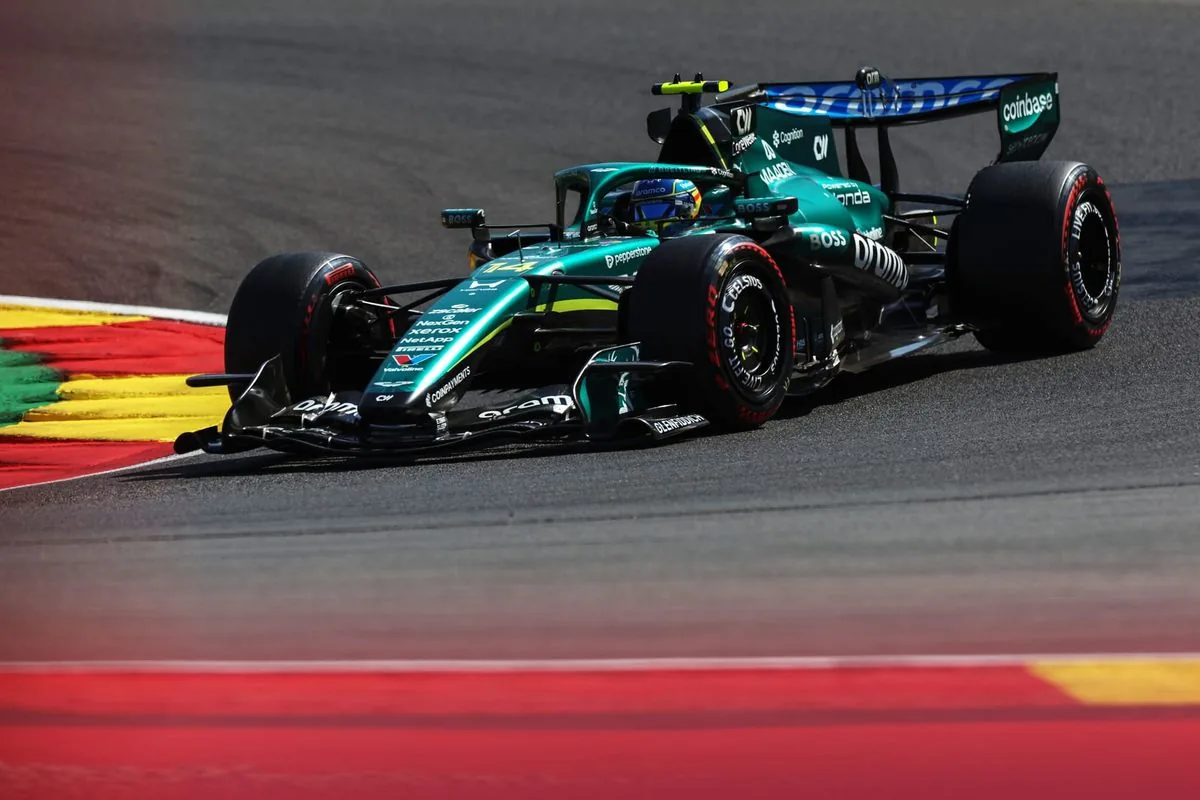
Aston Martin’s significant upgrade
Aston Martin is set to introduce a substantial upgrade package at the Hungarian Grand Prix, featuring a heavily revised car. This upgrade includes a new chassis, reduced weight, and significant aerodynamic changes. It marks the team’s first major upgrade of the year, following a challenging start to the season where both their car and Honda engine performed below expectations.
The team has opted to introduce these new parts all at once, a departure from the more common strategy of gradually rolling out smaller upgrades over several races. This decision was made to ensure the most efficient use of their budget within the sport’s spending cap. However, this approach has meant that Aston Martin has progressively fallen further behind competitors in recent races.
Fernando Alonso expressed optimism about the new package but also urged caution regarding immediate expectations. He stated that he is not focused on specific numbers or positions for the upcoming weekend, but rather on understanding the car’s direction and whether the team is on a positive development path. The Hungarian Grand Prix circuit is considered more favorable for Aston Martin, as power is not the primary factor there.
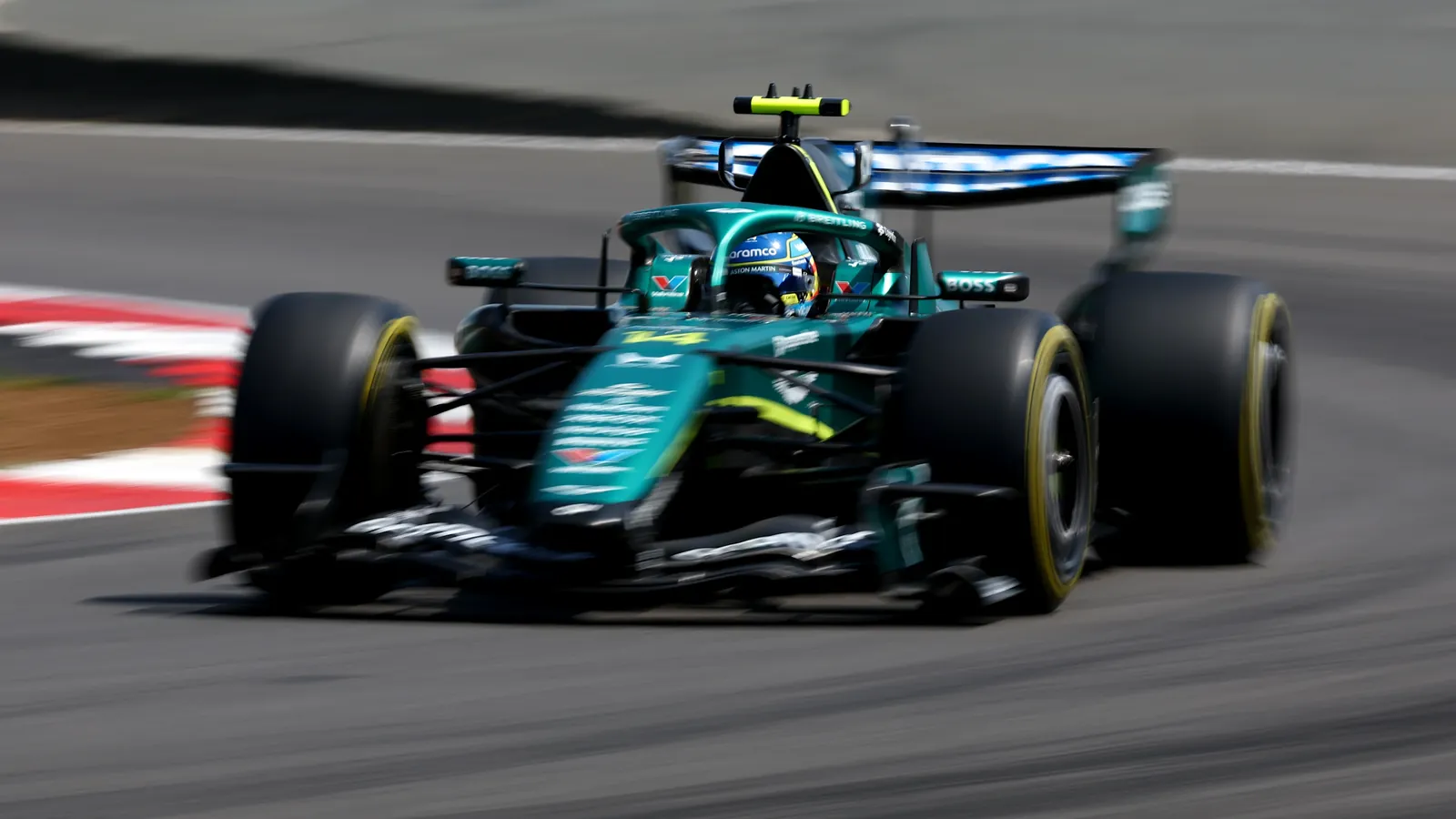
Adrian Newey, Aston Martin‘s chief technical officer, explained that the team made the difficult decision to halt developments in the first half of the year after realizing they would not be competitive in the early races. This allowed them to reorganize, implement new systems for the future, and conduct proper research for the 2026 car. The upgrade package for Hungary is considered the first stage of this renewed development effort, with a second stage planned for Zandvoort.
Challenges and future outlook
The early part of the 2026 season proved to be extremely challenging for Aston Martin, both on the chassis and power unit fronts. Newey acknowledged that the team likely placed too much expectation on themselves and underestimated the strength of their opposition. He noted that serious work on the 2026 car did not begin until mid-March 2025, with a model entering the wind tunnel in mid-April, putting them several months behind rivals.
The team also identified issues with their existing tools and processes, some of which dated back to the early 1990s. This difficult period has been used as an opportunity to overhaul their operational methods. The new package for Hungary involves taking weight out of the chassis and gearbox, requiring re-homologation and crash testing of the forward chassis. While the front suspension remains unchanged, the rear suspension has been slightly revised, and a new nose along with substantially revised aerodynamic surfaces have been developed. The goal is to bring the car very close to the weight limit.
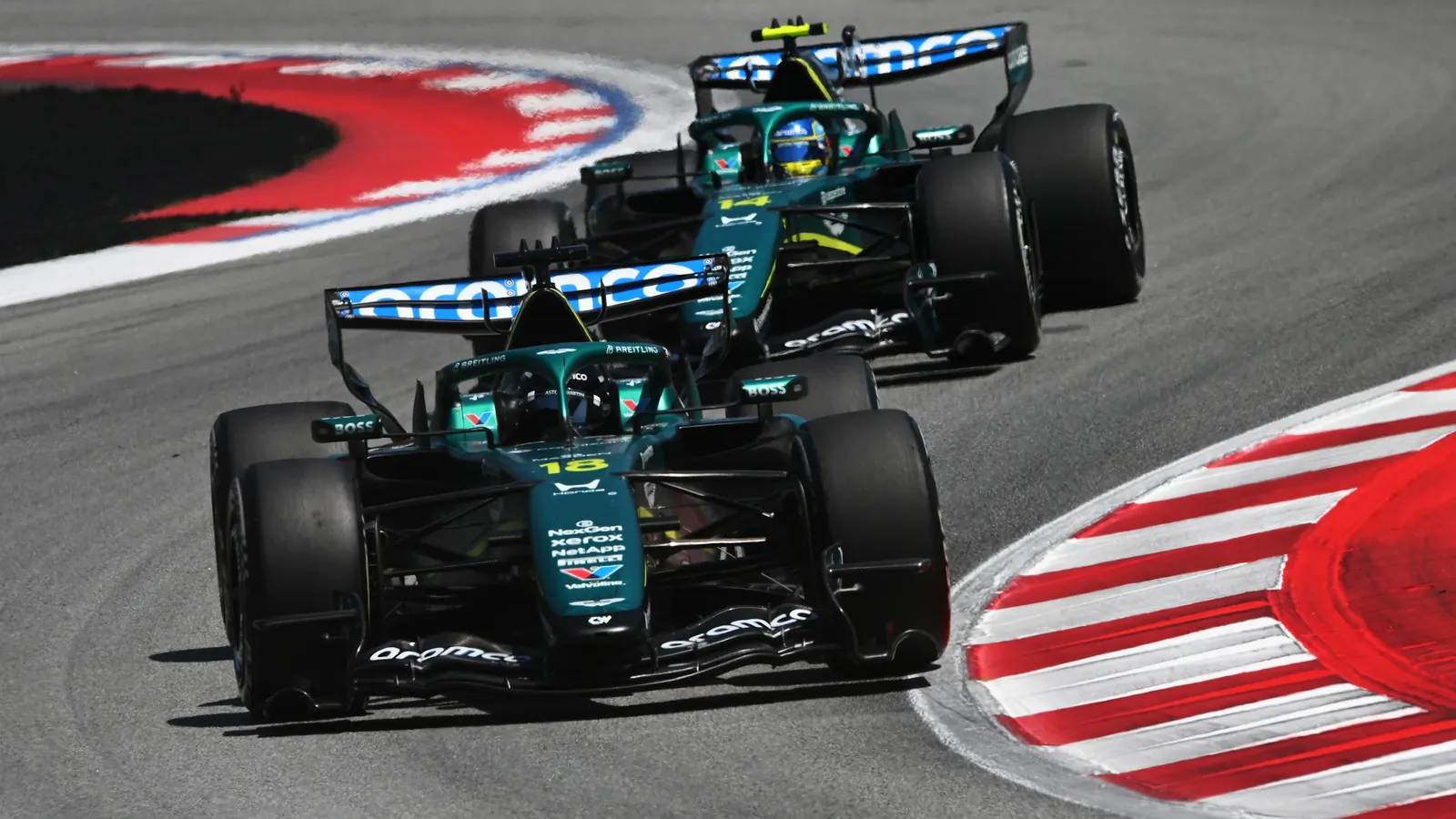
Despite the significant changes, Alonso‘s decision regarding his future in F1 will not be based solely on the performance of this upgrade. He is out of contract at the end of the season and is weighing whether to continue racing. He reiterated his long-term commitment to Aston Martin, stating he has a contract and is not moving. However, he also expressed concerns about the high levels of energy management required by the latest generation of F1 engines, which he finds less satisfying as a driver, particularly on high-speed circuits like Silverstone and Spa.
Mike Krack, Aston Martin‘s Chief Trackside Officer, emphasized that the most important goal for the team with these upgrades is to be able to compete again in races, as they have struggled to keep up with the midfield in recent events. The Honda power unit is also expected to receive a development engine at the Dutch Grand Prix, the first race after Formula 1‘s four-week summer break. This indicates a more cohesive working relationship between Aston Martin and Honda, despite initial frustrations.
Alonso, who will be 45 on 29 July, believes the team will fix its problems, and has confidence that Adrian Newey will eventually provide a top-tier car. He also trusts that Honda will resolve the power unit issues. For Alonso, the decision to continue racing hinges on finding enjoyment and adrenaline in the sport. He noted that recent races at Silverstone and Spa were not enjoyable to drive, and he seeks to regain the adrenaline he once experienced from an F1 car.
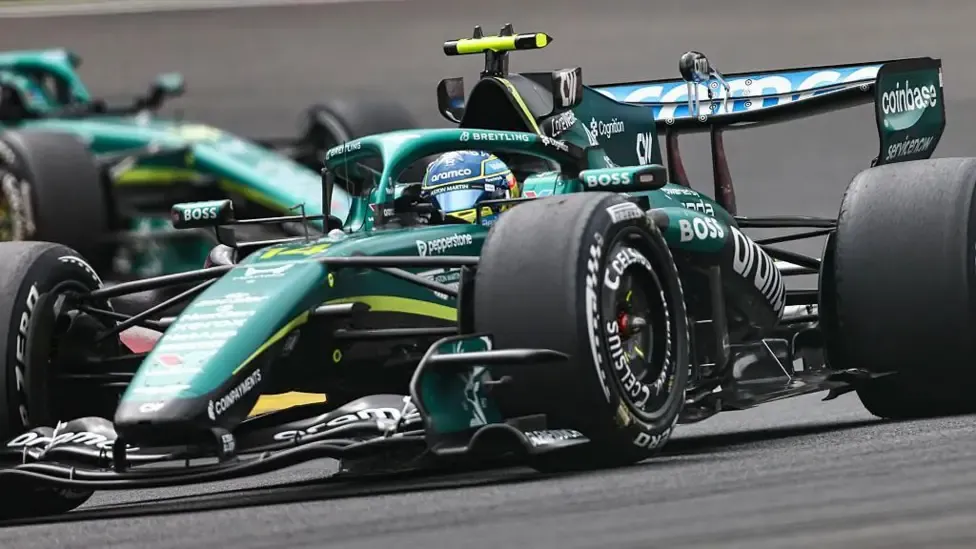
The team’s reserve driver, Jak Crawford, has been instrumental in the development push, contributing through both real-life runs and extensive simulator work where he has already sampled the upgraded AMR26. The upgrade package is expected to be a significant step, though specific performance numbers are not being publicly stated ahead of its track debut.
Read Also
Source: bbc.co.uk