Russell’s difficult start in Hungary
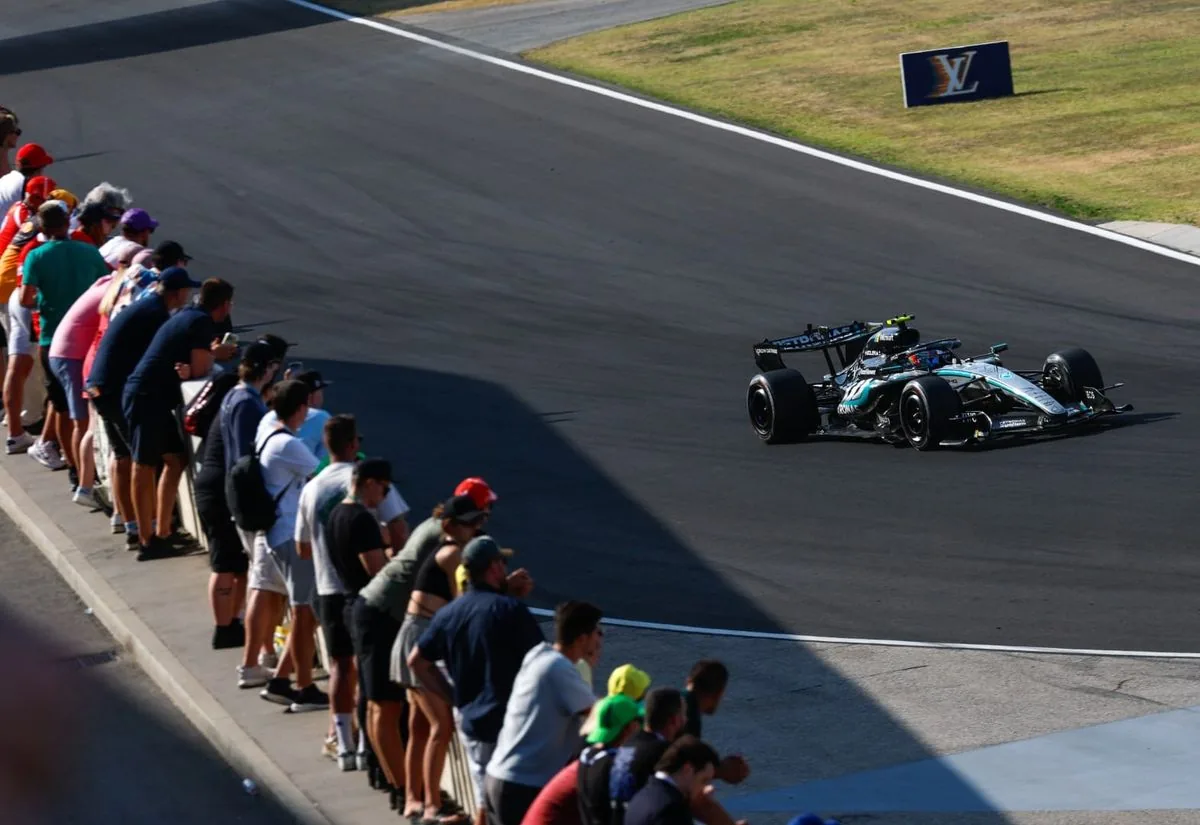
George Russell experienced a challenging start at the Hungarian Grand Prix, which saw him drop significantly in position. He began the race at the Hungaroring from sixth place but quickly fell back to 21st, ahead of only Sergio Perez, who started from the pit lane. This dramatic drop was due to his car entering anti-stall.
Mercedes Deputy Team Principal Bradley Lord clarified that Russell was not at fault for the incident. Lord explained that as drivers hold their engine’s RPM at a specific level while waiting for the start, Russell’s revs unexpectedly rose disproportionately to his throttle input. The revs then hit the rev limiter, and despite Russell’s attempts to regain control, he was unable to optimize his start.
Lord detailed that Russell was lifting off the throttle to under 10% demand when the lights went out. This resulted in him making a start with insufficient throttle, leading to the anti-stall system engaging and causing him to fall to the back of the field.
Team’s analysis of the issue
Initially, there was no immediate explanation for Russell’s problem. Russell himself noted that his car’s engine did not react properly to his throttle inputs, stating, “I was reacting with my throttle, and it was doing nothing. So, the engine wasn’t reacting to the throttle.” Mercedes Team Principal Toto Wolff also observed that Russell applied about 10% throttle, but the engine revved to its maximum before bogging down when he lifted off.
Early suspicions, including those from teammate Kimi Antonelli, pointed to a “top of the pack” issue. This problem relates to the challenge drivers face in managing the 2026 turbo hybrid engines off the start line. Drivers need to maintain high revs for several seconds to build exhaust energy and reduce turbo lag. If the battery charges to its maximum, the MGU-K cannot provide load against the engine, affecting turbo spooling and potentially cutting off fuel flow and throttle opening.
However, subsequent analysis by the team ruled out the “top of the pack” theory. Instead, the poor start was attributed to a problem with the car’s rev control management on the grid. Russell had been trying to manage a major fluctuation in revs by adjusting his throttle application during the start sequence. Unfortunately, he was at 10% throttle when the lights changed, which was insufficient for a successful launch and caused the anti-stall to activate.
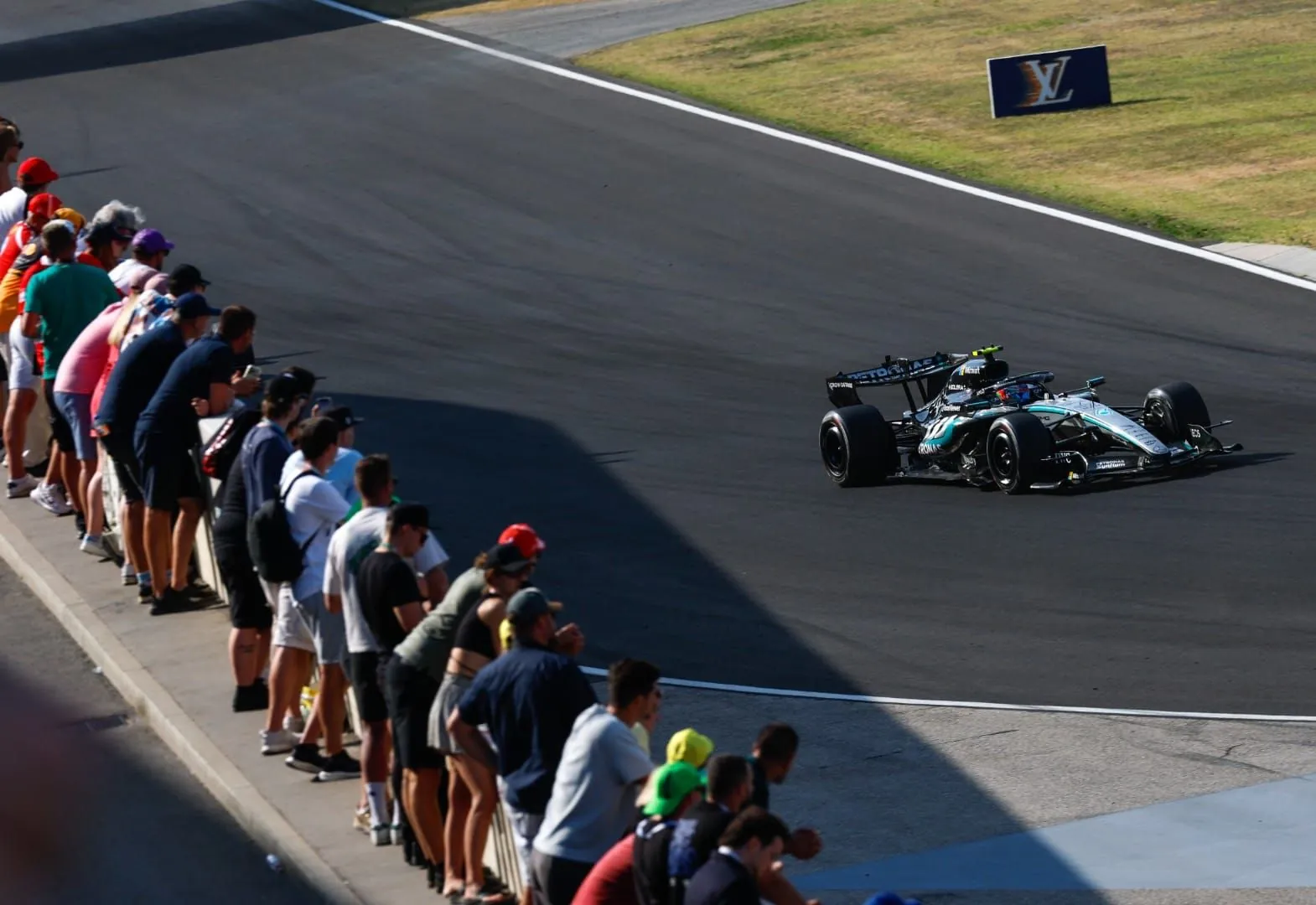
One contributing factor might have been the longer-than-usual start sequence in Hungary. The time from the pre-start blue lights to the red lights going out was approximately 13 seconds, which is at the upper end of the normal window compared to events like the Belgian GP, where it was just over 10 seconds.
Russell’s recovery drive
Despite the setback, Lord commended Russell for an “incredible recovery drive.” Russell systematically overtook cars during the first stint and ultimately worked his way back up to seventh position, securing valuable points. He finished a couple of seconds behind Red Bull’s Isack Hadjar.
Lord also mentioned that Russell was unlucky with the timing of the Virtual Safety Car (VSC), which appeared one lap after his second pit stop. Had the VSC occurred earlier, allowing him a “free stop,” he could have potentially finished even higher than his eventual seventh-place finish.
Russell expressed his frustration with the recurring issues, stating that the entire team shares his disappointment. He emphasized the need for the team to examine their processes to prevent similar errors. As drivers and teams head into the summer break, Russell holds third place in the championship standings.
Read Also
Source: formula1.com