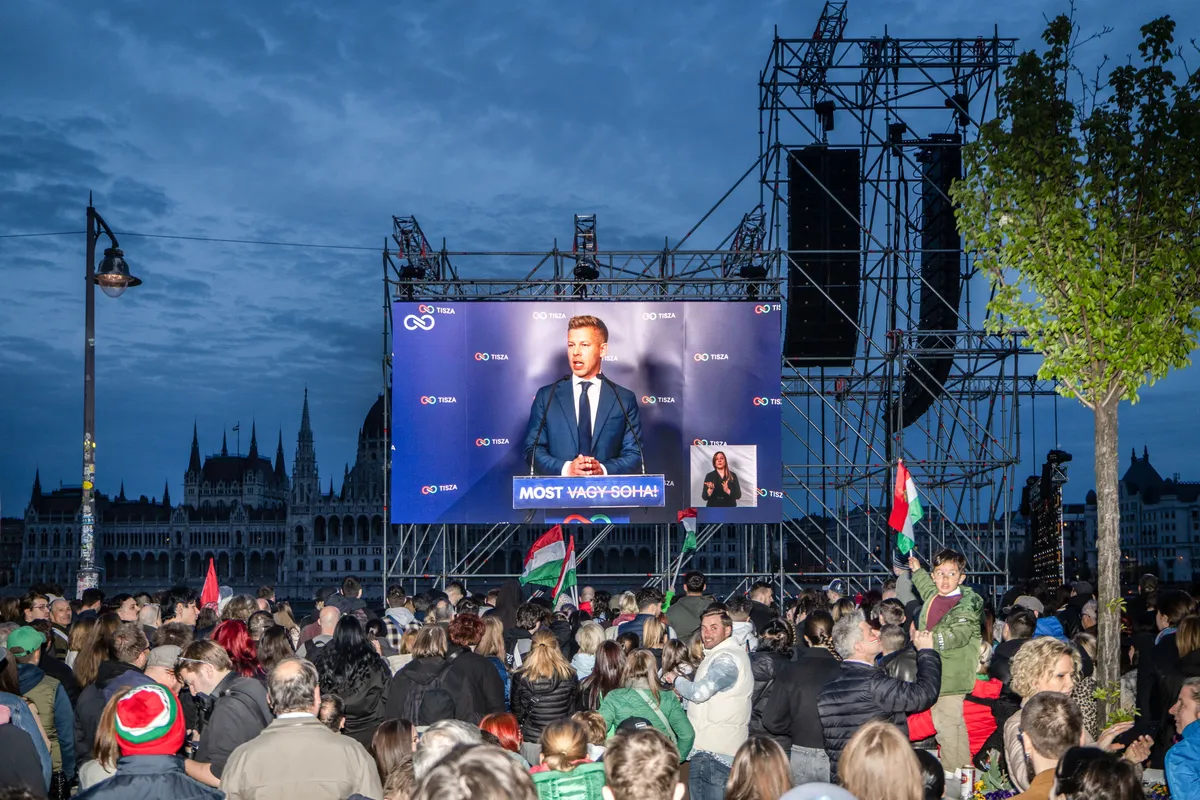
The Tisza Party has made history by winning the Hungarian parliamentary election with a commanding two-thirds majority, securing 138 out of 199 seats in parliament. This decisive victory has ended Viktor Orbán’s 16-year tenure as Prime Minister, marking a significant shift in Hungary’s political landscape.
The election, held on April 12, 2026, saw a remarkable voter turnout of nearly 80%, with many young voters mobilizing against Orbán’s Fidesz party, which suffered a staggering defeat, winning fewer than 15 individual seats. The Tisza Party’s success is attributed to its grassroots campaign led by Péter Magyar, who has pledged to repair Hungary’s relationship with the European Union and tackle corruption.
In a statement following the election results, Viktor Orbán acknowledged the defeat, saying, “I congratulated the victorious party.” Meanwhile, Péter Magyar declared, “Tonight, truth prevailed over lies,” reflecting the sentiments of Tisza supporters who celebrated the outcome with chants of “We did it!” This election is seen as a test of the far-right movement in Europe, closely monitored by international observers.
The Tisza Party’s super-majority positions it to amend the constitution, a power that could reshape Hungary’s governance. The campaign was marked by allegations of Russian interference and attempts to discredit Tisza, but the party’s message resonated with voters, particularly the youth, with 65% of voters under 30 planning to vote against Orbán.
The election results have prompted reactions from various European leaders, indicating a potential shift in Hungary’s approach to EU relations and domestic policies. As Péter Magyar prepares to take office, he faces the challenge of addressing the public’s expectations for change and reform.
As Hungary embarks on this new political chapter, uncertainties remain regarding the future direction of the Tisza Party and its ability to fulfill its promises. Details remain unconfirmed about how quickly Magyar will implement changes and whether he can navigate the complexities of a divided political landscape.
The implications of this election extend beyond Hungary, as it signals a potential shift in the broader European political climate. Observers will be watching closely to see how the Tisza Party’s governance unfolds and what it means for Hungary’s role within the European Union.