DR Congo’s World Cup Journey and Preparation
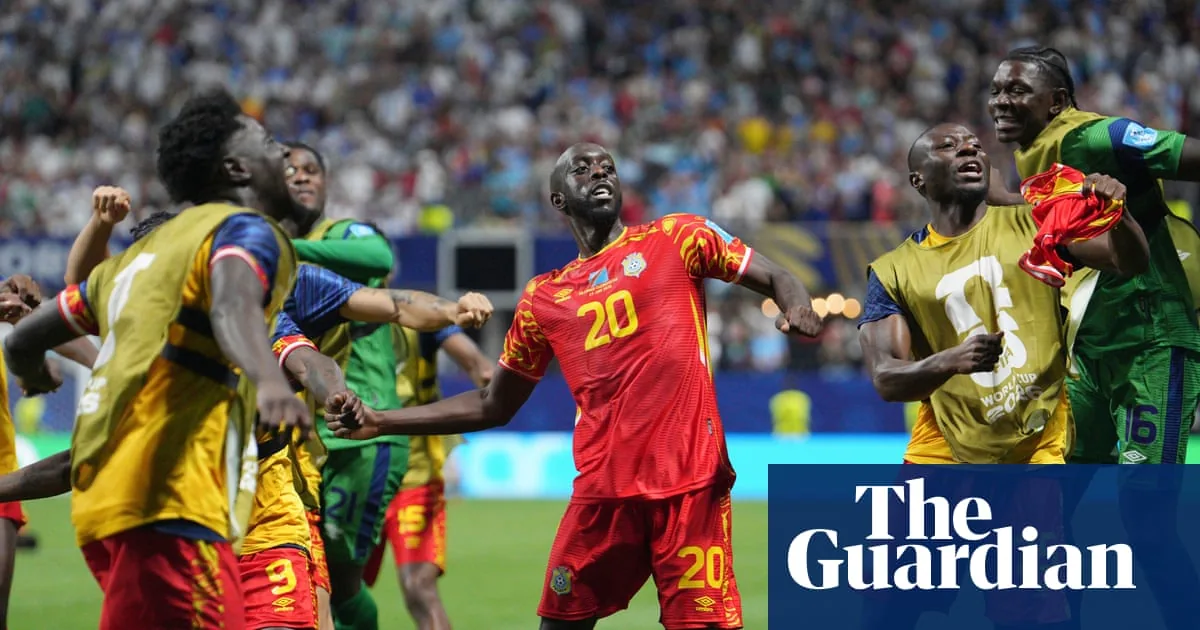
The Democratic Republic of the Congo is set to face England in the last 32 of the World Cup. This match marks a significant moment for the team, which first competed as Zaire in 1974, becoming the first sub-Saharan African nation to qualify for the finals. Their journey to this stage has been described as challenging, having finished a point behind Senegal in their qualifying group. They also eliminated African heavyweights Cameroon and Nigeria in the playoffs.
The squad, assembled by coach Sébastien Desabre with significant input from consultant Gabriel Zakuani, includes players from the Congolese diaspora across Europe. Zakuani, a former defender and captain for the Leopards, played a key role in bringing players into the national team setup. He declined an offer to co-commentate on the upcoming match due to his emotional attachment to the team, opting instead to watch with the local community in Tottenham.
The team’s performance in the tournament has shown their capability at this level. They secured a 1-1 draw against Portugal in their opening match in Houston. Following this, they came from behind to defeat Uzbekistan, earning their spot in the knockout stages. This resilience and their challenging qualification path have fostered a strong sense of unity and belief within the squad.
Tactical Approach Against England
DR Congo is expected to employ a 5-3-2 formation, a consistent shape observed throughout the tournament. This tactical setup suggests a defence-first approach, aiming to launch counter-attacks. Their average possession stands at 38.8%, significantly lower than England‘s 65.7%, indicating their preference for a more reactive style of play.
Despite their lower possession statistics, DR Congo displays a surprisingly proactive defensive strategy. They tend to hold a high defensive line and apply pressure to opponents, particularly from goal-kick situations. Their players are tasked with man-to-man marking across the pitch, with the two strikers and three midfielders pressing high against the opposition’s defence and midfield. The wing-backs are responsible for pressing opposing full-backs, leaving the three centre-backs to manage three attackers.
This aggressive pressing style, while potentially forcing errors, could also be exploited by England. England‘s coach, Thomas Tuchel, may look to use wide full-backs in deeper areas to draw out DR Congo‘s wing-backs, creating space. The team might also aim to entice pressure before accelerating through the middle third, a strategy designed to create space for players like Jude Bellingham, Marcus Rashford, Anthony Gordon, and Noni Madueke to run in behind the defence.
England could also target DR Congo‘s lack of width in midfield by using quick horizontal passes to switch play, aiming to isolate wingers against the wing-backs. This tactic was successfully used by Spain against Saudi Arabia in the group stage. Additionally, DR Congo‘s tendency to commit many players around throw-ins in the opposition’s half could allow England to find unmarked players and quickly switch play to gain an attacking advantage.
Key Players and Match Outlook
Several players with connections to English football are expected to feature in the match. Newcastle‘s Yoane Wissa, Sunderland‘s Noah Sadiki, and Aaron Wan-Bissaka are all anticipated to start for DR Congo. Axel Tuanzebe, a defender for Burnley, has also had a notable tournament performance. Sadiki, in particular, is reportedly being tracked by Chelsea and Manchester United after a strong season in the Premier League.
Gabriel Zakuani believes that DR Congo can draw inspiration from Ghana‘s performance against England in the group stages, highlighting perceived vulnerabilities in England‘s play. He suggests that England struggles to break down teams that sit back and that stopping Jude Bellingham could significantly disrupt their attack. Zakuani emphasizes DR Congo‘s athleticism and defensive strength, believing they possess more attacking threat than Ghana. He anticipates a tighter match than many might expect, with the team confident in their ability to secure a result.
DR Congo‘s own attacking threat should not be underestimated, with Yoane Wissa‘s ability to read attacking situations and react quickly in the box identified as a significant danger. The team’s unconventional build-up from goal-kicks, featuring a widely spaced backline and midfielders crowding areas for longer passes, makes them difficult to press cohesively. The match is scheduled to kick off at 5pm BST today at the Mercedes-Benz Stadium in Atlanta, Georgia.
Read Also
Source: theguardian.com