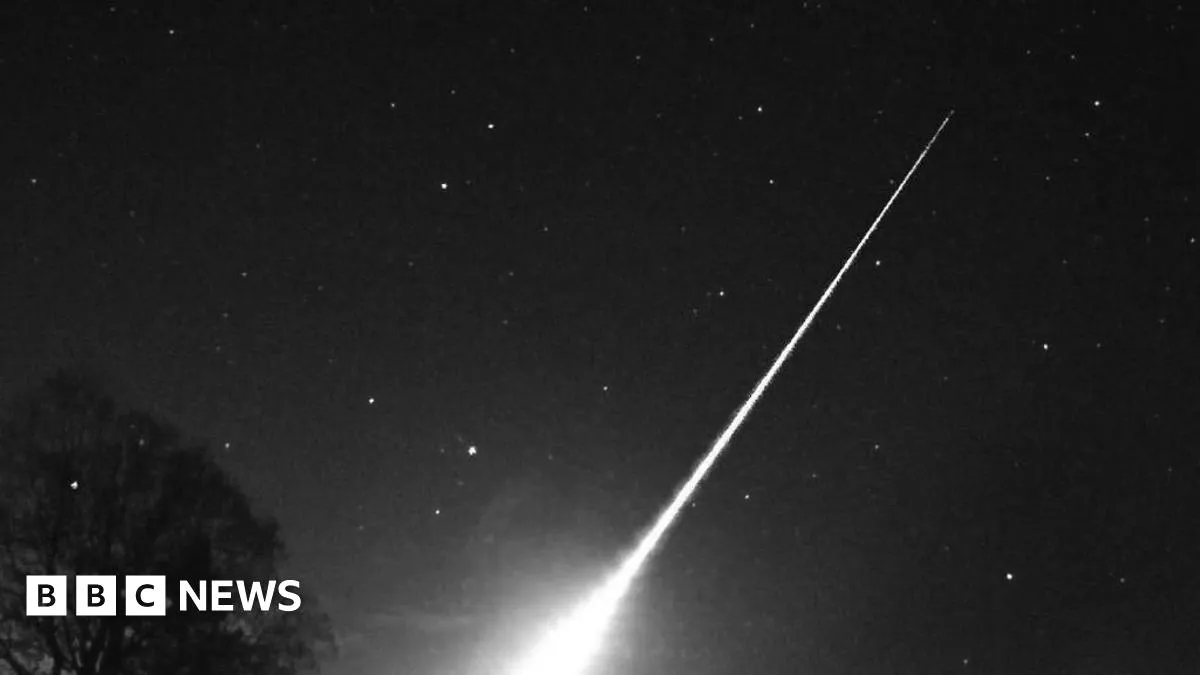
A meteor was spotted in the skies above East Yorkshire and Lincolnshire at 00:24 BST, creating a stir among local residents and astronomy enthusiasts. The UK Fireball Alliance confirmed that the bright fireball was indeed a meteor, which burned up in the atmosphere without leaving behind any recoverable meteorites.
Charlotte Bays from the UK Fireball Alliance stated, “Based on the fireball trajectory, the event occurred over the North Sea so, sadly, we do not expect any recoverable meteorites.” This sighting comes as anticipation builds for the Lyrids meteor shower, which is set to begin on April 14 and run through April 30, 2026. During this period, stargazers can expect to see a medium rate of shooting stars, particularly peaking on the night of April 21 into the early morning of April 22.
The Lyrids meteor shower is known for its connection to Comet Thatcher, with debris from the comet creating the spectacular display. Observers can expect to see around 5-6 meteors per hour during the peak nights, with the moon being 27% full, providing a unique viewing experience. Stargazers are advised to look towards the east after 10 p.m. local time to catch the best view of the meteors.
NASA has emphasized the importance of timing for optimal viewing, stating, “The best time to see the meteor shower is during its peak, in the dark hours after the moon sets and before the sun rises.” This guidance is crucial for those hoping to witness the celestial event, as the Lyrids are best seen in the Northern Hemisphere.
Interestingly, meteors observed during the Lyrids typically lack the long tails that are often associated with shooting stars. This phenomenon is due to the nature of the meteors themselves, which burn up in the atmosphere. In contrast, meteorites are less frequent and are generally large enough to survive the intense heat and land on Earth’s surface.
As the Lyrids meteor shower approaches, excitement is palpable among astronomy enthusiasts. The event is one of the first major meteor showers of the year, followed closely by the Eta Aquariids. Observers are encouraged to prepare for the upcoming spectacle, ensuring they have a clear view of the night sky.
Details remain unconfirmed regarding the exact number of meteors that will be visible during the Lyrids, but experts are optimistic about the viewing conditions. With no equipment needed to see the meteors, this event promises to be accessible to all who venture out to witness the night sky.