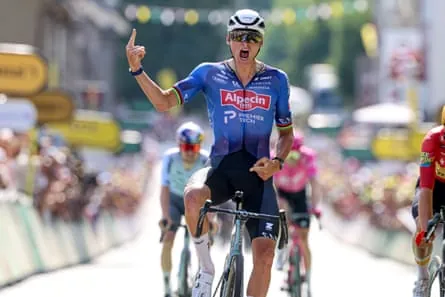
Tadej Pogacar has advocated for a significant alteration to the professional cycling calendar, particularly concerning races held in July and August. His comments follow a stage of the Tour de France that saw continued high temperatures. Mathieu van der Poel secured victory in the shortened ninth stage, which ran from Malemort to Ussel, with Tom Pidcock finishing third.
Pogacar, a four-time winner of the Tour de France, expressed his desire for a revised schedule. He stated that if he had the authority, he would move races from hot locations during July and August, implementing a completely different calendar. While acknowledging this is beyond his control, he suggested immediate adjustments such as earlier stage starts. He noted that a proposal to begin stages at 10 am would not fully address the issue, as riders would still conclude in the heat. Instead, he proposed starts at 8 am or 9 am, or even earlier, believing athletes could adapt to waking at 5 am for such an early start.
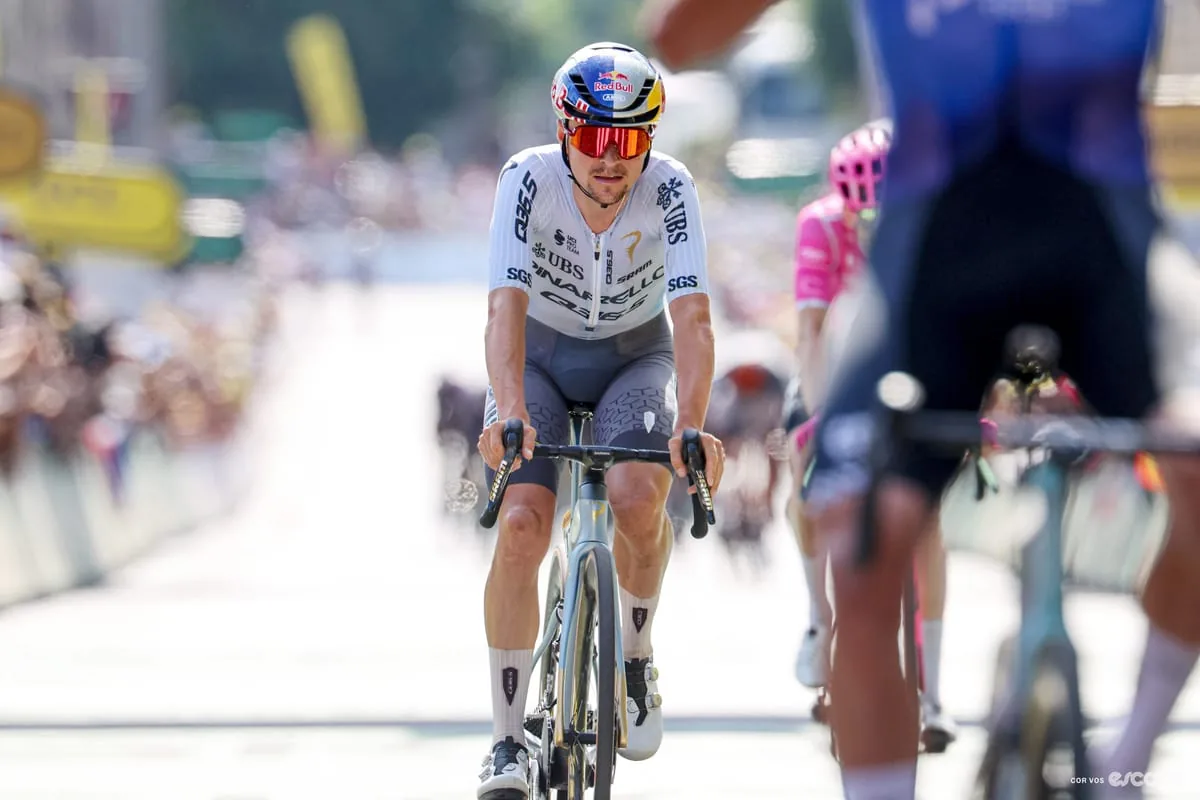
The undulating ninth stage to Ussel, featuring three steep climbs within the final 80 kilometres and nearly 2,700 metres of altitude gain, was shortened due to the heatwave. Despite this, the intense pace and challenging terrain had a notable impact on many riders in the peloton. Pidcock, racing for Pinarello-Q36.5, had a strong performance, actively participating in a 15-rider breakaway that included Van der Poel of Alpecin-Premier Tech.
Rider Challenges and Team Tactics
Pidcock described feeling strong during the stage, noting an improved performance compared to his previous breakaway experience in the Tour de France two years prior on the gravel stage to Troyes. However, he encountered mechanical issues when his gears ceased functioning, causing him to fall behind the leading group on the final climb. Despite these difficulties, he managed to reach the sprint, though he acknowledged that beating Van der Poel in such situations is challenging.
The Tour de France frequently experiences hot days, but prolonged heatwaves like the current one push the limits of measures such as ice vests, ice socks, and cold drinks. After crossing the finish line in Ussel, many riders, still in their full racing gear, dismounted their bikes and immediately sought relief in ice baths provided in team vans. Some teams are even utilising paddling pools and tin baths to quickly lower riders’ core temperatures post-race.
Paul Seixas’s Decathlon CMA CGM team employs a portable cryotherapy unit that travels with them. This unit is used to cool riders after each stage, aiming to accelerate recovery by reducing body temperature and aiding sleep. Tiesj Benoot, a teammate of Seixas, described the experience of sitting in a capsule at minus 120 degrees for approximately three minutes, noting its intensity compared to an ice bath.
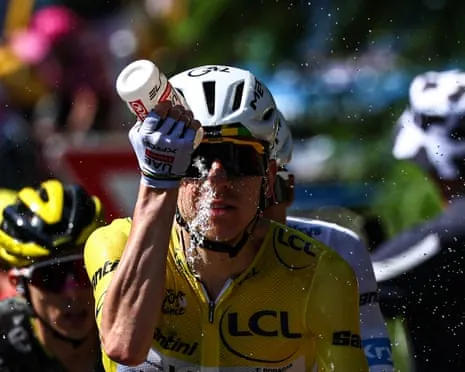
The Professional Cyclists Association (CPA) has also voiced concerns, emphasising the need for further action to safeguard rider welfare. The CPA highlighted the importance of fully implementing the extreme weather conditions protocol in response to the consistently hot afternoons. Echoing Pogacar’s sentiments, the organisation called for summer race start times to be adjusted to protect athlete health and urged discussions among all stakeholders during the winter to establish solutions before the summer of 2027.
Benoot commented that shortening the stage to Ussel did not significantly alter the experience for the peloton, stating that it amounted to only 40 minutes less racing, despite having endured similar heat for eight days. He suggested that while ASO, the organiser, might be attempting to make a statement, other measures would be more beneficial.
Christian Prudhomme, the Tour director, explained that an earlier start for the Ussel stage was not logistically feasible. He noted the difficulty of waking riders at 5 am, even though this already occurs for anti-doping controls. The upcoming rest day on Monday is expected to provide some relief from the racing, but temperatures are forecast to remain in the high 30s into the middle of next week, offering little comfort to those already struggling.
Team UAE Emirates-XRG Tactics Under Scrutiny
The tactics employed by UAE Team Emirates-XRG during the ninth stage generated discussion among cycling experts. While Van der Poel secured his victory, finishing ahead of Tobias Johannessen of Uno-X Mobility and Pidcock, UAE Team Emirates-XRG spent a considerable portion of the stage leading the peloton. Riders like Tim Wellens and Felix Grossschartner were prominent in driving the pace, seemingly in support of yellow jersey holder Pogacar for a late stage victory attempt.
However, there was also speculation that the defending champion’s team aimed to make the race as demanding as possible for their competitors. Pogacar ultimately finished 11th, comfortably maintaining his lead in the maillot jaune, 2’42” ahead of Jonas Vingegaard of Visma-Lease a Bike. Jonathan Vaughters, chief of EF Education-EasyPost, admitted uncertainty regarding UAE Team Emirates-XRG’s strategy, but suggested they successfully fatigued other riders. He noted the psychological advantage of being at the front, dictating the pace and inflicting pain rather than receiving it, even if it meant expending more energy.
Vaughters described the team’s approach as a display of strength, suggesting they enjoyed making other teams suffer. He observed that when the pace eased, they allowed other teams to take over. He concluded that by keeping the gap close, they effectively maintained a high intensity throughout the day. Conversely, Robbie McEwen disagreed with this interpretation, asserting that teams in the Tour de France do not simply ride to tire out opponents. He believed UAE Team Emirates-XRG had a clear objective, likely aiming for a stage win, as such a hard pace would not be maintained without that intention.
Adam Blythe offered another perspective, attributing UAE Team Emirates-XRG’s actions to their strength and the fatigue they could impose. He pointed out that riders like Wellens and Grossschartner were actively involved, while others conserved energy. Pogacar, when questioned about his team’s tactics, explained that the breakaway had a lead of just over one minute. He stated that after the climbs, the team intended to push to the finish, but other teams began to chase. He concluded that it was a favourable day for his team.
The rest day on Monday is anticipated to provide some relief from the intense racing conditions.
Read Also
Source: theguardian.com