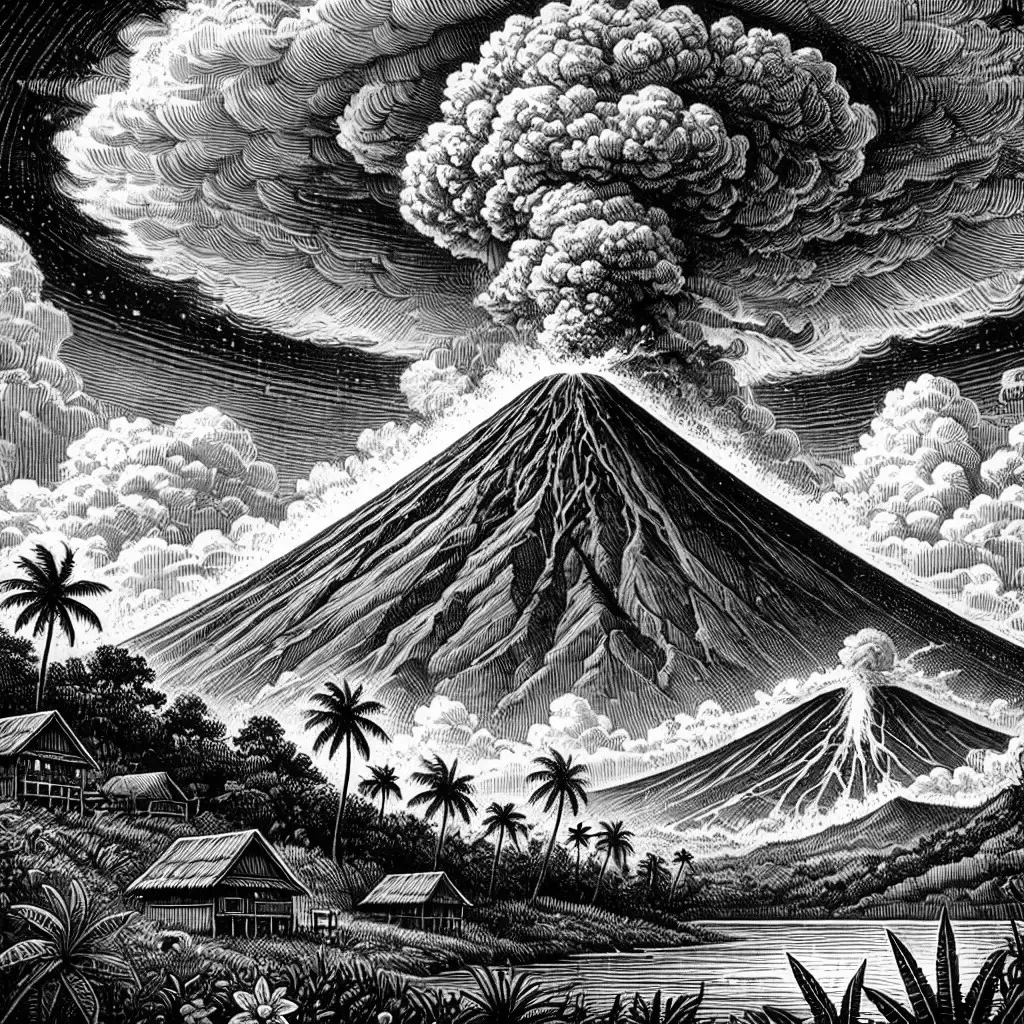
Sakurajima, one of Japan’s most active volcanoes, erupted on April 14, 2026, sending an ash plume soaring 3.4 kilometers into the sky. This eruption marks the first major volcanic event of the year and the second significant eruption in just four months, raising concerns among residents and officials alike.
The Japan Meteorological Agency responded swiftly, elevating the volcanic alert level to 3, indicating that the volcano is in a state of heightened activity. Residents of Kagoshima city, which has experienced regular ash deposits from Sakurajima since the 8th century, are now facing renewed challenges as ash blankets the area.
Experts noted that the eruption has helped alleviate some of the crustal deformation caused by the accumulation of magma beneath the surface. “The eruption helped ease most of the crustal deformation – a build-up of pressure inside the volcano caused by accumulating magma,” stated an unnamed source familiar with the situation.
In a related geological development, the Taftan volcano in Iran has shown signs of uplift, nudging upward by about 3.5 inches (9 centimeters) over the past ten months. Though Taftan has not erupted in human history, the recent changes suggest that pressure is building near its summit. Pablo J. González, a volcanologist, remarked, “It has to release somehow in the future, either violently or more quietly.” This statement underscores the unpredictability of volcanic activity in the region.
As Sakurajima continues its near-continuous activity, which has persisted since 1955, officials are closely monitoring the situation. The recent eruption serves as a reminder of the ongoing geological dynamics in Japan, where volcanic activity is a constant threat.
Residents are advised to stay informed and prepared for potential further eruptions. The Japan Meteorological Agency will continue to provide updates on the situation as it evolves, emphasizing the importance of public safety in the face of natural disasters.
Details remain unconfirmed regarding the full impact of the eruption on local infrastructure and air quality, but the immediate focus remains on monitoring the volcano’s activity and ensuring the safety of the surrounding communities.