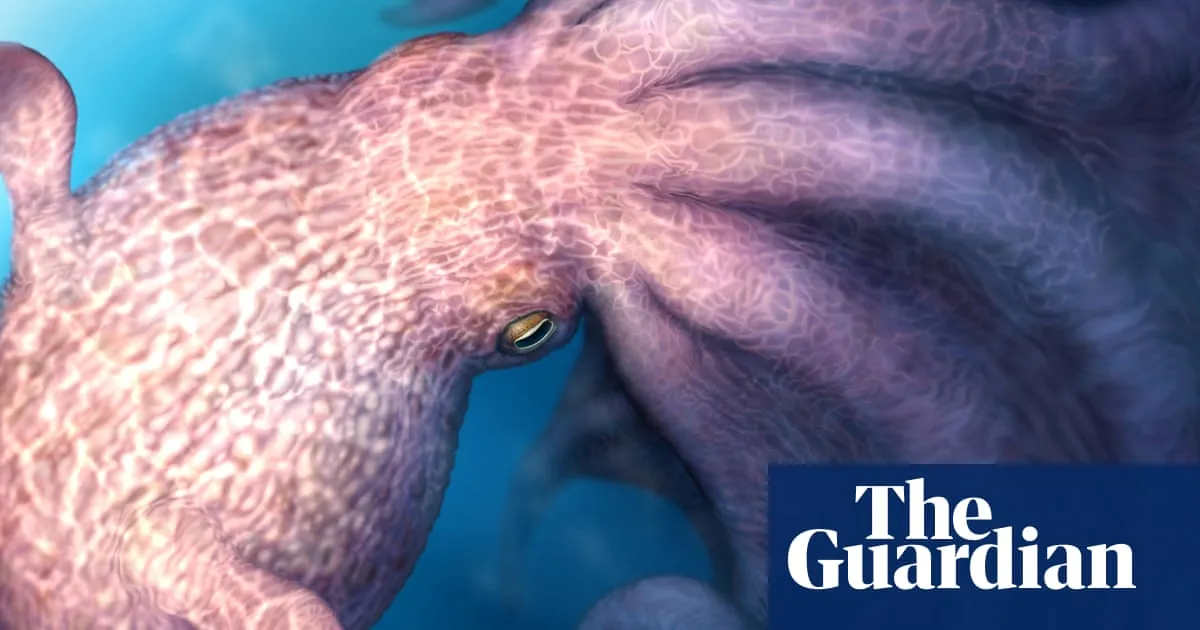
“To see a beak this size is quite amazing, to be honest. It was a massive animal,” said Dr. Thomas Clements regarding the newly discovered giant octopus species, Nanaimoteuthis haggarti.
Recent fossil analysis indicates that these ancient cephalopods reached lengths of up to 19 metres during the Cretaceous period. This challenges previous beliefs that they were minor players in the marine food web.
Fossilized beaks found in Canada and Japan, dating back 72 to 100 million years, show distinct wear patterns. These patterns suggest that N. haggarti preyed on hard-shelled animals like fish and crustaceans.
Dr. Yasuhiro Iba noted, “This indicates that these animals were not only powerful, but also behaviourally sophisticated predators.” The study identified 15 large fossil beaks previously misclassified as vampire squids.
Notably, N. haggarti’s beak surpasses that of modern giant squid, which measures around 12 metres. This reinforces the idea that these creatures played a significant role in their ecosystems.
Moreover, evidence of lateralised behaviour—suggesting arm preferences in feeding—adds another layer to our understanding of their predation strategies. Zoe Hughes remarked, “Most Cretaceous octopuses that I’m aware of are about the size of my hand, but this is so much bigger!”
The Late Cretaceous was a time dominated by ocean giants, including mosasaurs and plesiosaurs. With their tentacles and suckers, giant octopuses could effectively capture prey with no escape.
As research continues, scientists hope to uncover more about the role of these colossal creatures in the ancient oceans. Their findings may reshape our understanding of predator dynamics during this pivotal period in Earth’s history.