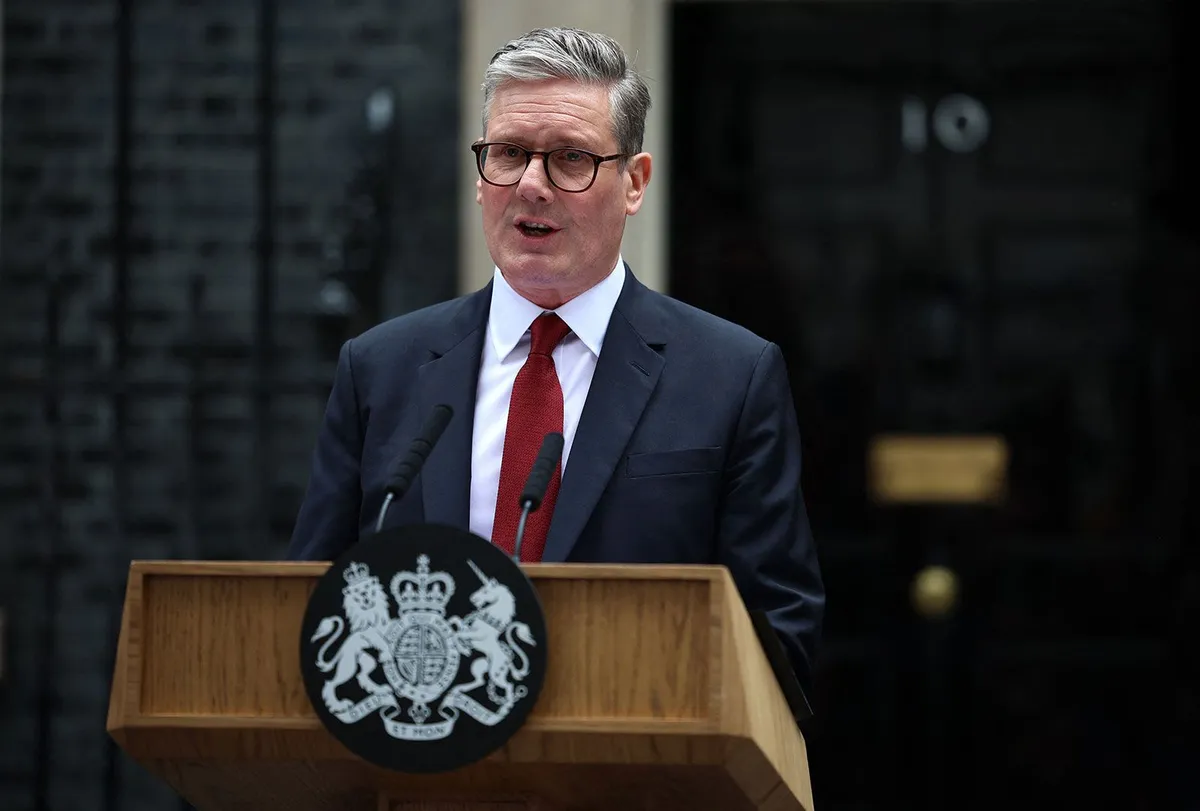
Before Keir Starmer’s recent diplomatic mission to the Gulf region, the expectation was that the UK would continue to play a limited role in Middle Eastern affairs, largely due to the fallout from Brexit and the Iraq war. The perception of Britain as a follower rather than a leader had taken root, leaving many to question its influence in a region fraught with conflict.
However, a decisive moment arrived with the announcement of a ceasefire agreement overnight, which Starmer welcomed, stating, “I welcome the ceasefire agreement reached overnight, which will bring a moment of relief to the region and the world.” This shift in tone marks a significant change in the UK’s approach to the ongoing tensions involving Iran, Israel, and Gaza.
Starmer’s visit to the Gulf is not merely symbolic; it represents an effort to restore Britain’s diplomatic standing. The Prime Minister is set to meet with key partners including Saudi Arabia, the UAE, Bahrain, and Qatar to discuss further diplomatic efforts. This comes at a time when the UK has intercepted over 110 drone attacks in the region and the RAF has conducted more than 1600 hours of defensive operations.
Despite these efforts, critics caution that Starmer’s approach may risk appearing as diplomacy without consequence. The UK government insists this is a moment for diplomacy, not military escalation, emphasizing a commitment to legality and restraint in the region.
Expert voices highlight the complexities of this diplomatic endeavor. The Iraq war shattered trust across the region, embedding a perception of Britain as a follower rather than a leader. Furthermore, Brexit has diminished Britain’s diplomatic reach, narrowing its influence without replacing it with a coherent global strategy.
As Starmer seeks to navigate these challenges, the exact impact of his visit on Britain’s diplomatic standing in the Middle East remains unclear. Details remain unconfirmed, but the stakes are high as the UK attempts to redefine its role in a volatile region.