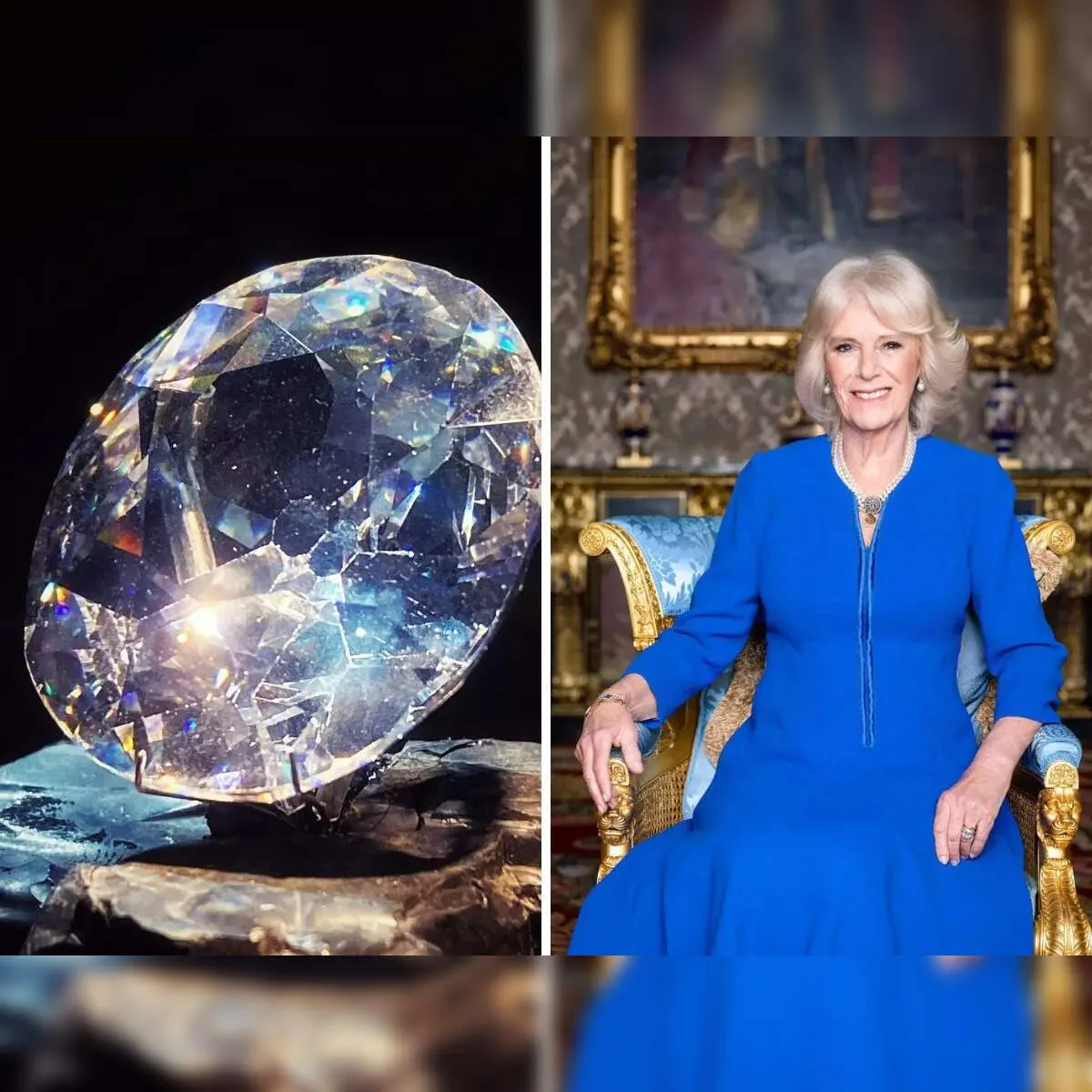
“If I was to speak to the king separately from that, I would probably encourage him to return the Kohinoor diamond,” said New York City Mayor Zohran Mamdani during a press conference early Tuesday. His statement underscores the ongoing tensions surrounding colonial artifacts.
The Koh-i-Noor diamond has been part of the British crown jewels since the 1849 annexation of Punjab. India claims that the diamond was stolen and has repeatedly demanded its return. The diamond, originally discovered in India, likely in the Kollur mine of present-day Andhra Pradesh, was handed over to the British Crown by Lord Dalhousie.
The Koh-i-Noor was ceded to Queen Victoria as part of the Treaty of Lahore and has since undergone significant alterations — it was drastically recut from 186 carats to its current weight of 105.6 carats. Currently, it is stored at the Tower of London.
Mamdani is notable as he is the first South Asian, Muslim, and African-born mayor of New York City. His comments reflect a broader dialogue on restitution and historical injustice surrounding colonial artifacts.
Key tensions surrounding the Koh-i-Noor:
- The diamond has been claimed by multiple countries including India, Pakistan, Afghanistan, and Iran.
- Calls for its return have been a fixture in Indo-British diplomatic relations since at least 1947.
- The diamond symbolizes deeper issues of colonial history and restitution efforts.
The Koh-i-Noor has become a major point of contention between the U.K. and India; however, Iran and Pakistan have also laid claims to the stone. Mamdani’s remarks may reignite discussions on this historical artifact.